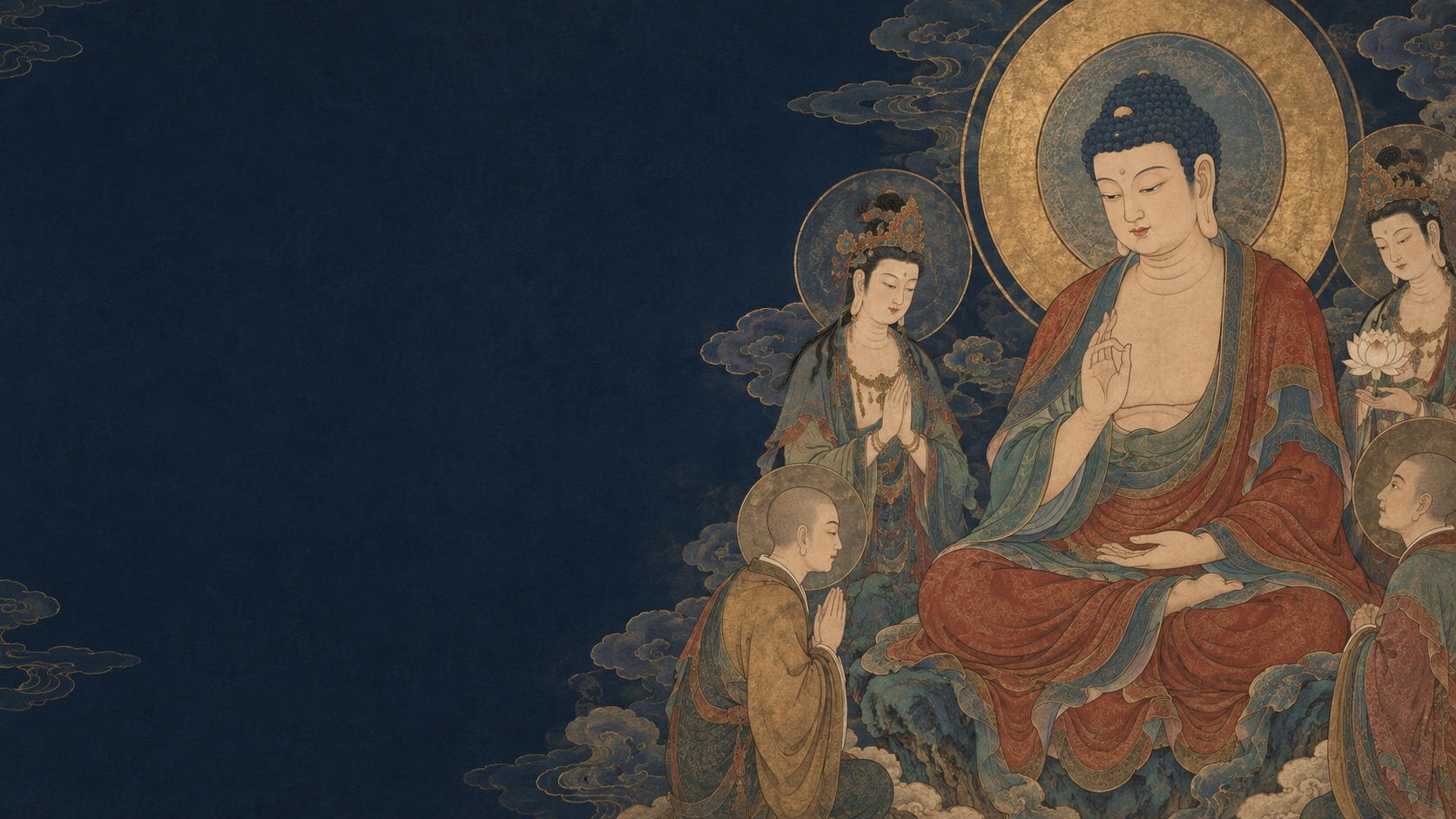
Contemporary painted cover artwork: a Buddhist assembly in midnight blue and antique gold.

A BOOK. A SHARED CURIOSITY. A NEW WAY TO READ.

The Diamond
Sutra,
Reopened.

An illustrated Ming-dynasty book, reconsidered through text, image, and sound.

A project by Rosalina (RH) Xue & Fred (YT) Xue

AI-assisted cover artwork · not a historical facsimile

BEGINNING WITH A BOOK IN
The Metropolitan Museum of Art

Ming dynasty · Wanli period
Collection 47.136.4 · Public Domain source images

View the original

01 / THE EDITION

A book to read. A scroll to listen to.

Follow the scripture as it unfolds from right to left. Or take your time with the pages, one by one.

The complete scroll film

V13.1 · 46 min 37 sec · Chinese recitation · 1080p

No autoplay. Updated to the accepted V13.1 lettering and stanza layout, with the approved audio unchanged. The film includes opening material and the main Diamond Sutra. Small illustration inscriptions are not all recited.

Watch on YouTube
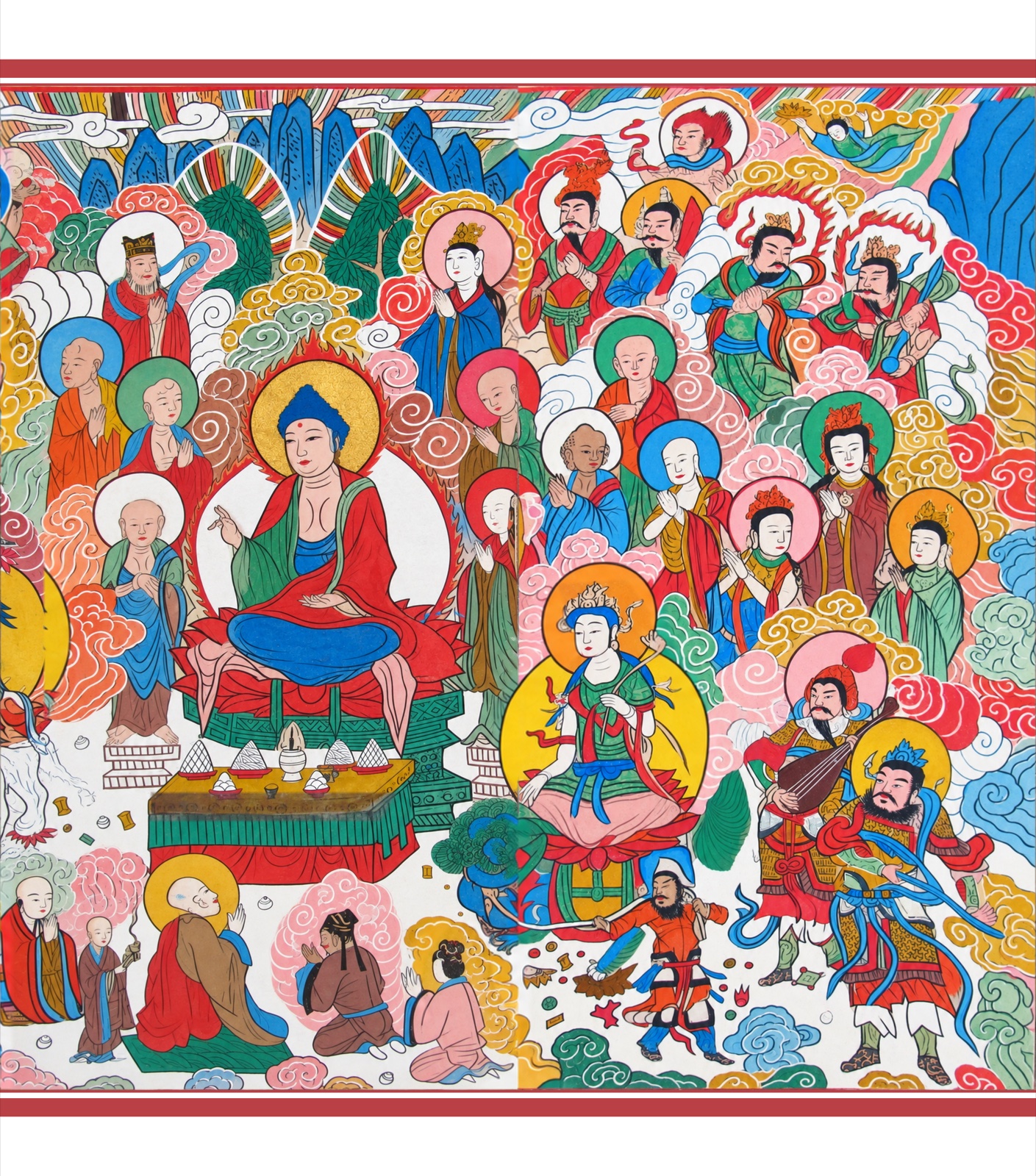
Reading page 018 · digitally revised illustration

02 / THE BEGINNING

A small idea. A patient undertaking.

It began with Rosalina’s interest in art and religion—and a question about what AI might help make possible.

Already curious about tools such as Codex and Cursor, Rosalina proposed the project. Fred provided the technical support needed to turn the idea into a complete workflow, and helped review and check the resulting images.

The aim was simple: to recite with care, letting the words of the Diamond Sutra unfold before the listener.

Before making that film, however, there was a book to examine carefully. Photographs had to become a reading sequence. Folds and perspective had to be understood. Each repair had to be checked against the words it was meant to preserve.
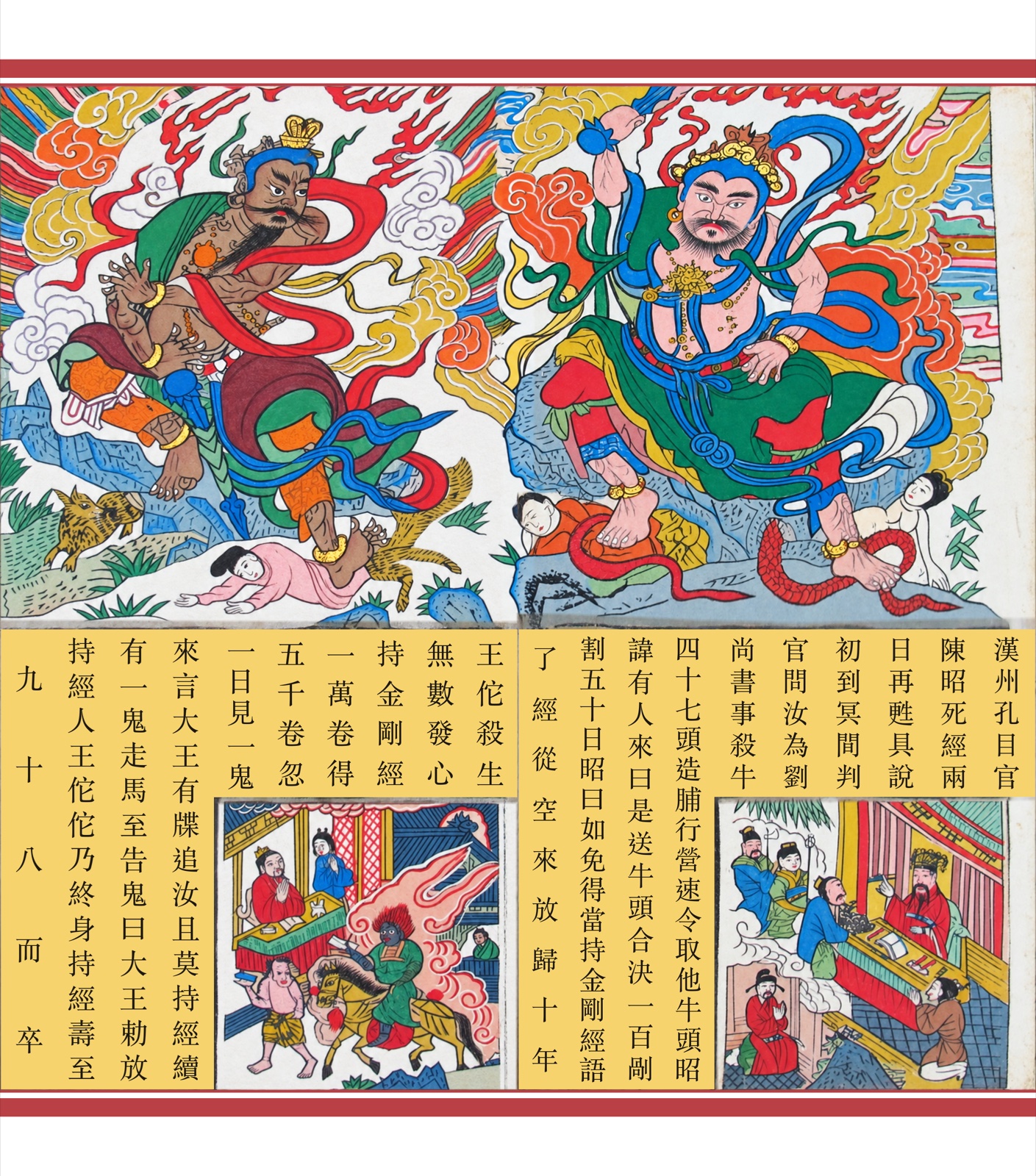
03 / LOOK CLOSER

Clear is not always correct.

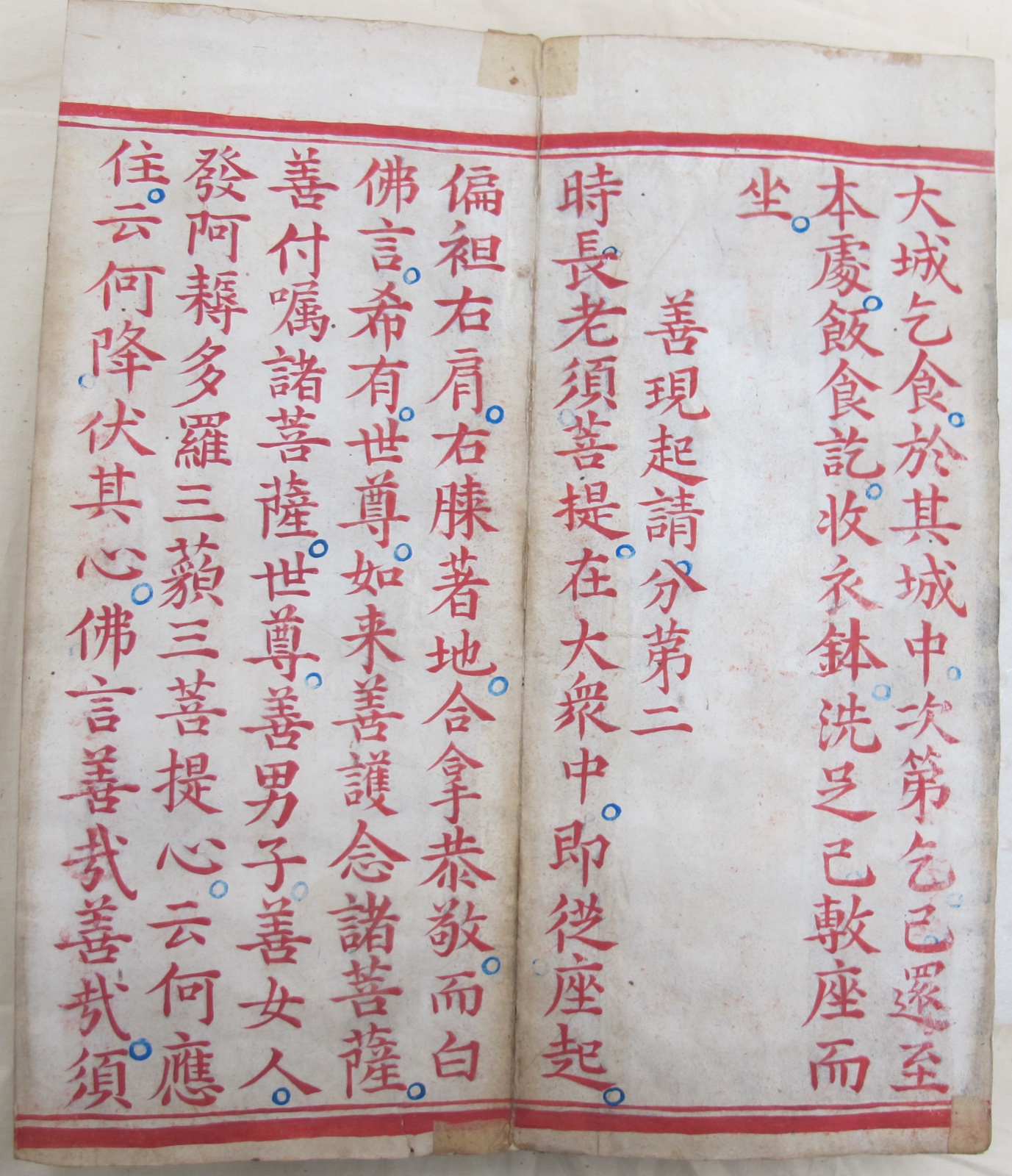
A clean image can still carry a mistake. Returning to the source became part of the method, not just the final check.

SOURCE PHOTOGRAPHPAGE 017
Museum source photograph, Scripture, 017
DIGITAL READING EDITIONPAGE 017
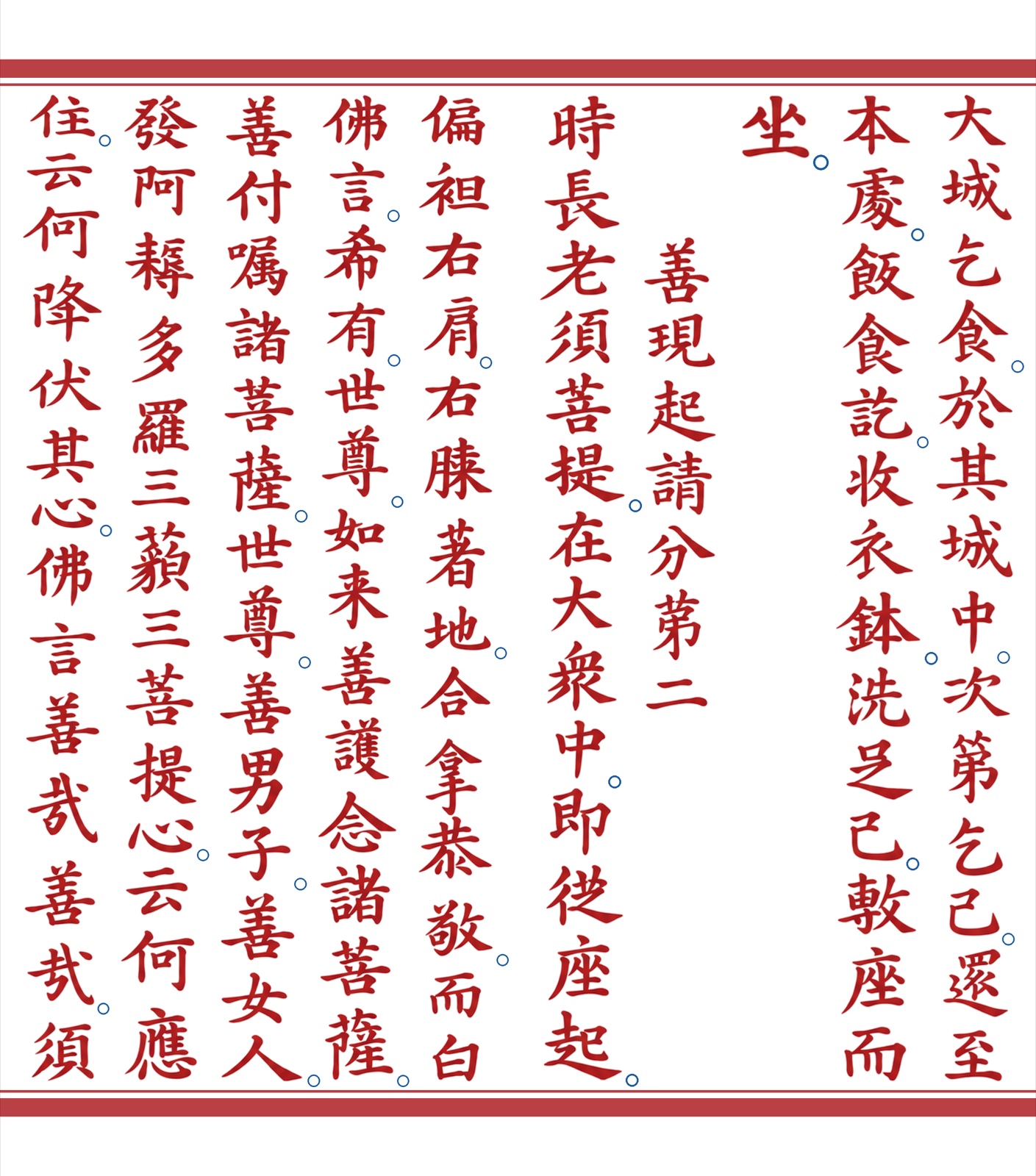
Modern revised page, Scripture, 017

Photographs and revised pages are shown at their own proportions. This is a comparison of editorial treatment, not a pixel-aligned restoration test.

01

A stroke in the wrong place

菩薩 looked clear—but the lower part of 菩 had been assigned to 薩. The strokes were there. Their boundaries needed to be corrected.

See the recorded character repair

Earlier repair / corrected repair, reading p. 004. Neither side is the museum source photograph.

02

The size of the writing

An orderly grid did not guarantee the right visual scale. A reference page and a one-page trial helped separate character size from spacing.

03

A phrase, not isolated words

Correct pronunciation did not guarantee a natural reading. Word continuity, section pauses, and loudness each needed their own check.

04 / THE MAKING

From Day Zero to a reading edition.

The earliest recorded project instruction is dated September 11, 2026. These seven calendar dates trace an iterative process—not seven uninterrupted days, and not a claim that every question is settled.

Read the public project notes

Gather the book photographs and consider a scroll accompanied by recitation. Early image trials reveal that visual polish cannot establish textual accuracy. The priority becomes OCR and the order of 96 source photographs.

WHAT WE KEPT IN VIEW

I

The source comes first.

A plausible image is not enough. Keep the photographs and the decisions that connect them to the edition.

II

Uncertainty stays visible.

Some small yellow-panel inscriptions include contextual conjectures. Clear typesetting does not make them historically certain.

III

Tools assist; people decide.

AI helped with recognition, code, image candidates and speech. Its work still required review and editorial judgment.

05 / PEOPLE & PROVENANCE

Made together. With the source in view.

Respectfully revised, adjusted, and digitally restored by

Fred (YT) Xue
Rosalina (RH) Xue

Project initiator

Rosalina (RH) Xue

Proposed the project out of her interest in art and religion, and curiosity about what AI could help make possible.

Technical support & image review

Fred (YT) Xue

Provided technical support for production and helped review and verify the resulting images.

The historical source

The Diamond Sutra, unidentified artist, China, Ming dynasty, Wanli period (1573–1620). The book combines handwritten red scripture and painted illustrations with woodblock-printed text. Anonymous Gift, 1947. Accession 47.136.4.

The Met identifies the source images as Public Domain. This independent project is not commissioned, certified, or endorsed by the Museum.

View the original

About this digital edition

This is a modern reading edition, not physical conservation of the original object or a certified reconstruction of its first appearance. The cover art, source photographs and revised pages are different kinds of material and are labeled accordingly.

The public account presents selected evidence. Private conversations, voice templates, credentials, and complete internal logs are not published.